
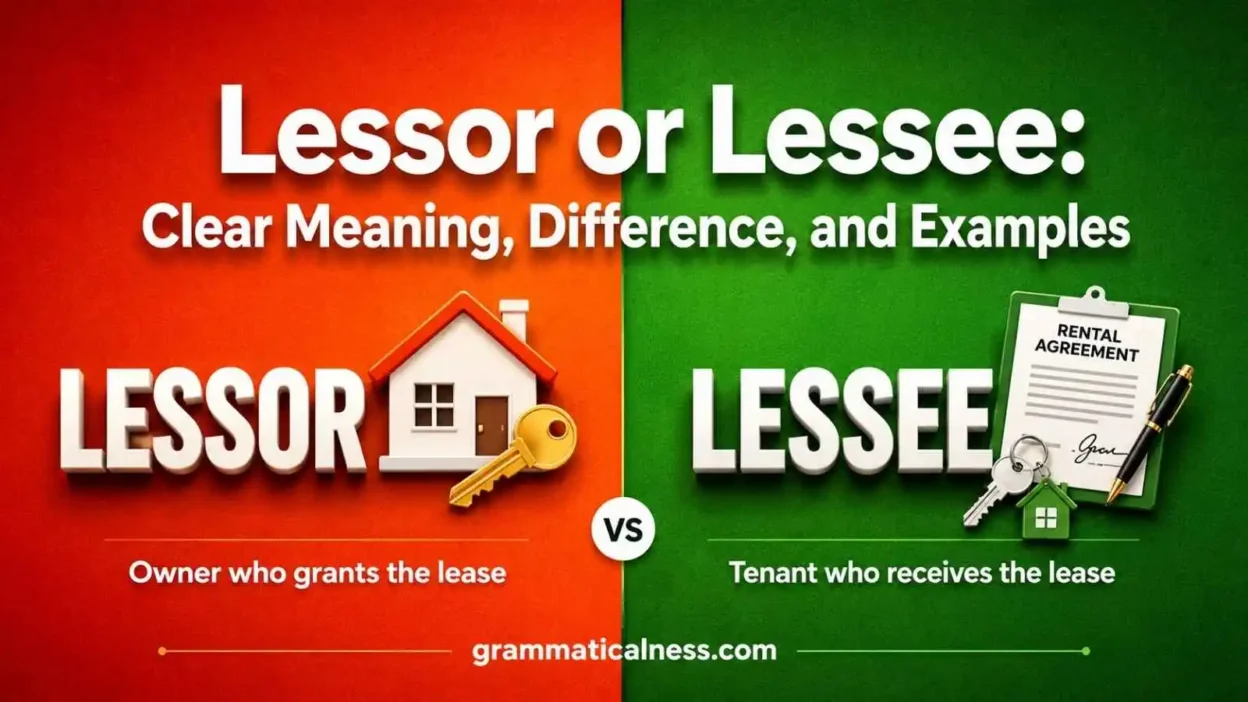
Lessor and lessee are both correct words, but they do not mean the same thing. They name opposite sides of a lease.
Use lessor for the person or company that grants the lease. Use lessee for the person or company that receives the lease and uses the property or asset.
The confusion is common because the words look almost the same and often appear in the same contract. The easiest way to remember them is this: the lessor lets someone use something; the lessee receives the right to use it.
Quick Answer
Choose lessor when you mean the owner or party giving another person the right to use property under a lease.
Choose lessee when you mean the renter, tenant, or user who gets that right under the lease.
Example:
The apartment owner is the lessor.
The person renting the apartment is the lessee.
In everyday speech, many people say landlord and tenant for housing. In formal lease language, lessor and lessee are more precise.
Why People Confuse Them
People confuse lessor and lessee because both words come from the same lease context. They are often printed close together in rental agreements, business contracts, car leases, and equipment leases.
The endings also cause trouble. In many English words, -or names the person doing an action, while -ee names the person receiving it. That pattern helps here.
The lessor grants the lease.
The lessee receives the lease.
Still, these are formal words, so they may feel unfamiliar unless you read contracts often.
Key Differences At A Glance
| Context | Best Choice | Why |
| The owner leases out an apartment | Lessor | The owner grants the lease |
| The tenant signs the lease | Lessee | The tenant receives the right to use the apartment |
| A dealership leases a car to a driver | Lessor | The dealership provides the car under the lease |
| A driver leases a car from a dealership | Lessee | The driver uses the car and makes payments |
| A company rents office space | Lessee | The company uses space owned by another party |
| A property company rents out office space | Lessor | The company owns or controls the space being leased |
Compact comparison:
• Lessor: grants the lease, keeps ownership, usually receives payment.
• Lessee: receives the lease, uses the property or asset, usually makes payment.
• Both: are formal nouns used in lease, legal, business, and finance writing.
Meaning and Usage Difference
A lessor is the party that leases property or an asset to someone else. The lessor may be a person, a landlord, a dealership, a property company, or another business.
A lessee is the party that leases property or an asset from the lessor. The lessee may be a tenant, driver, company, restaurant, office renter, or equipment user.
The main difference is not grammar. Both words are nouns. The difference is role.
The lessor gives the right to use.
The lessee gets the right to use.
For example, in a car lease, the leasing company is the lessor, and the customer is the lessee. In an apartment lease, the landlord or property owner is the lessor, and the renter is the lessee.
Tone, Context, and Formality
Lessor and lessee sound formal. They are common in contracts, lease agreements, business documents, real estate paperwork, and accounting discussions.
In casual writing, simpler words often sound better. Instead of lessor, you can often say landlord, owner, or leasing company. Instead of lessee, you can often say tenant, renter, or customer.
Use the formal terms when accuracy matters. Use simpler terms when speaking to a general reader.
Formal: The lessee must return the vehicle at the end of the lease term.
Plain: The customer must return the car when the lease ends.
Both are correct. The better choice depends on the audience.
Which One Should You Use?
Use lessor when the sentence is about the party that owns, controls, or provides the leased property.
Use lessee when the sentence is about the party that uses the leased property.
For a home or apartment, the lessor is usually the landlord or property owner. The lessee is usually the tenant.
For a vehicle, the lessor is usually the leasing company or dealership. The lessee is the driver or customer.
For equipment, the lessor is the company that provides the equipment. The lessee is the business using it.
A simple test: ask, “Who is letting someone use the asset?” That party is the lessor. Then ask, “Who gets to use it?” That party is the lessee.
When One Choice Sounds Wrong
The wrong word changes the meaning of the sentence.
Wrong: The lessee owns the apartment and rents it to tenants.
Correct: The lessor owns the apartment and rents it to tenants.
Wrong: The lessor moved into the apartment after signing the lease.
Correct: The lessee moved into the apartment after signing the lease.
Wrong: The lessee must provide the car to the customer.
Correct: The lessor must provide the car to the customer.
Wrong: The lessor pays monthly rent to use the office.
Correct: The lessee pays monthly rent to use the office.
If the person is giving access, use lessor. If the person is receiving access, use lessee.
Common Mistakes (and Quick Fixes)
One common mistake is treating lessor and lessee as interchangeable. They are not interchangeable. They refer to opposite sides of the lease.
Another mistake is thinking these words apply only to apartments. They can apply to real estate, cars, equipment, land, office space, and other leased assets.
A third mistake is using the formal terms when plain words would be clearer. In a friendly article for renters, landlord and tenant may be easier. In a lease agreement, lessor and lessee may be more exact.
Quick fix:
Say lessor for the giver of the lease.
Say lessee for the receiver of the lease.
That one rule solves most uses.
Everyday Examples
The lessor agreed to repair the heating system before the tenant moved in.
The lessee must pay rent by the first day of each month.
The dealership is the lessor, and Maya is the lessee on the car lease.
The lessee cannot sublease the office without written permission.
The lessor still owns the equipment during the lease term.
A restaurant may be the lessee of a commercial kitchen space.
The property manager signed the lease on behalf of the lessor.
The lessee returned the truck at the end of the lease.
The lease says the lessor may inspect the property after giving notice.
The lessee is responsible for using the property according to the lease terms.
Dictionary-Style Word Details
Verb
• lessor: Not commonly used as a verb in standard US English. It is normally a noun.
• lessee: Not commonly used as a verb in standard US English. It is normally a noun.
Use lease as the verb instead.
Example: The company will lease the equipment for three years.
Noun
• lessor: A noun meaning the person or party that grants a lease.
Example: The lessor owns the warehouse.
• lessee: A noun meaning the person or party that holds or uses property under a lease.
Example: The lessee uses the warehouse for storage.
Both words can refer to a person, company, organization, or other legal party.
Synonyms
• lessor: closest plain alternatives include landlord, owner, property owner, and leasing company. These are not always exact in every lease, but they often fit common contexts.
• lessee: closest plain alternatives include tenant, renter, leaseholder, and customer. These also depend on the type of lease.
Helpful opposites:
• The opposite role of lessor is lessee.
• The opposite role of lessee is lessor.
Example Sentences
Example Sentences
Lessor
• Before the lease begins, the lessor must provide the keys.
• Monthly payments go to the lessor from the tenant.
• Throughout the car lease, the leasing company remained the lessor.
Lessee
• Under the lease terms, the lessee agreed not to damage the property.
• Before moving in, the lessee paid a security deposit.
• For the office suite, the business became the lessee.
Word History
• lessor: The word is tied to older forms of the verb lease, meaning to grant use of property by agreement. It developed as a noun for the party granting the lease.
• lessee: This word is also tied to lease and uses the -ee ending to mark the party receiving the lease.
The useful point for modern readers is the role difference, not the exact date of origin.
Phrases Containing
• lessor: lessor agreement, lessor rights, lessor obligations, lessor accounting, lessor consent, lessor default.
• lessee: lessee agreement, lessee rights, lessee obligations, lessee accounting, lessee payments, lessee default.
These phrases mostly appear in formal lease, legal, real estate, and finance writing.
FAQs
The lessor is usually the landlord, property owner, or company that gives someone else the right to use property under a lease.
Yes. In a rental agreement, the lessee is usually the tenant or renter. The lessee is the person or business using the property under the lease.
The lessor grants the lease. The lessee receives the lease and uses the property, vehicle, equipment, or space.
The lessee usually pays rent or lease payments. The lessor usually receives those payments.
Yes. A company can be a lessor if it leases property or equipment to others. A company can be a lessee if it rents office space, vehicles, equipment, or another asset.
Often, yes, but not always in everyday wording. A lessor is the party that grants the lease. That party may be the owner or someone legally allowed to lease the property or asset.
Usually, yes. A lessee is the person or business that rents or uses something under a lease. In plain language, “renter” or “tenant” is often easier to understand.
Use lessor for the party giving the lease and lessee for the party receiving the lease. In casual writing, “landlord” and “tenant” may sound more natural for apartment rentals.
No. They are opposite roles. If you switch them, the sentence may say the wrong person owns, uses, pays for, or grants the leased property.
Remember this: the lessor lets someone use something, and the lessee receives the right to use it.
Conclusion
Lessor and lessee are both correct, but they name opposite roles.
The lessor grants the lease.
The lessee receives the lease and uses the property or asset.
For a simple memory trick, connect lessor with “lets someone use it” and lessee with “gets to use it.” Once you know who owns or grants the lease and who uses the leased item, the right word is easy to choose.