
Smelled or smelt can confuse writers because both words can connect to the verb smell. The key difference is not meaning in every case. It is mainly usage, audience, and context.
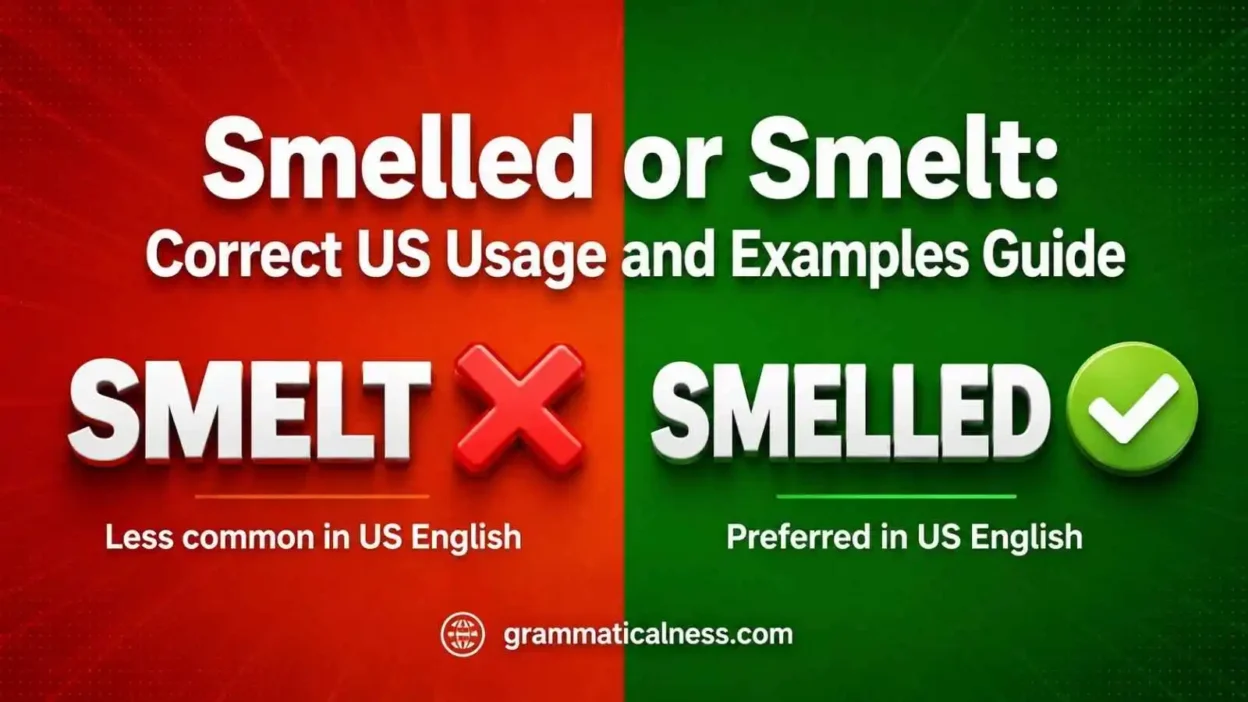
For US English, smelled is the safer and more natural choice when you mean noticed an odor or gave off an odor. Smelt is mostly used that way in British English. In American English, smelt is more likely to remind readers of a small fish or the process of melting ore to get metal.
Quick Answer
Use smelled in standard US English when you need the past tense or past participle of smell.
Example: “The kitchen smelled like fresh bread.”
Smelt can also mean “smelled” in British English, but US readers may find it unusual. In US writing, save smelt for its separate meanings: a fish or a metalworking verb.
Why People Confuse Them
People confuse these words because smell has two accepted past forms in some varieties of English: smelled and smelt. That makes the pair look like a simple spelling choice.
The problem is that American readers do not treat both forms equally. In US English, smelled is normal in everyday, school, business, and professional writing.
Another reason is that smelt has other meanings. A smelt can be a small fish. To smelt metal means to heat ore and separate the metal from it. Those meanings are not the same as smelling coffee, smoke, flowers, or food.
Key Differences At A Glance
| Context | Best Choice | Why |
| US English past tense of smell | smelled | Standard and natural for American readers |
| US English past participle of smell | smelled | Works after has, have, or had |
| British English odor meaning | smelled or smelt | Both can be used |
| Small fish | smelt | Smelt is a noun in this meaning |
| Extracting metal from ore | smelt | Smelt is a separate verb |
| Past tense of metalworking smelt | smelted | Not smelled or smelt |
Meaning and Usage Difference
Smelled is the regular past tense and past participle of smell.
Examples:
“The soup smelled spicy.”
“I have smelled that perfume before.”
Smelt can also be a past tense and past participle of smell, but that use is mainly British. For a US audience, it can sound unfamiliar or overly British.
Smelt also works as a separate word. As a noun, it means a small fish. As a verb, it means to extract metal from ore by heating it. In that metalworking sense, the past tense is smelted, not smelled.
Pronunciation is simple but useful: smelled sounds like “smelld,” while smelt rhymes with “belt.”
Tone, Context, and Formality
In US English, smelled sounds neutral. It fits casual writing, school essays, workplace messages, news-style writing, fiction, and everyday speech.
Smelt sounds less natural to many American readers when it means “smelled.” It may sound British, old-fashioned, literary, or unexpected, depending on the sentence.
That does not mean smelt is always wrong. It is correct in British English for the odor meaning. It is also correct in US English when you are talking about fish or metalworking.
For a US grammar guide, the clearest advice is: use smelled for odors unless you have a special reason not to.
Which One Should You Use?
Choose smelled when writing for American readers.
Correct:
“I smelled smoke in the hallway.”
“The towels smelled clean.”
“She had smelled gas near the stove.”
Use smelt only when one of these is true:
- You are writing in British English.
- You are referring to the fish.
- You mean the process of extracting metal from ore.
- You are quoting someone who used that form.
Compact comparison:
- Smelled: best US choice for the past tense of smell.
- Smelt: British alternative for the odor meaning; also a fish or metalworking word.
- Smelted: past tense of the metalworking verb smelt.
When One Choice Sounds Wrong
Some sentences become confusing if you choose the wrong word.
Awkward for US readers:
“She smelt smoke in the garage.”
Better for US readers:
“She smelled smoke in the garage.”
Wrong meaning:
“The workers smelled iron from the ore.”
Correct:
“The workers smelt iron from the ore.”
Or, in past tense:
“The workers smelted iron from the ore.”
Also avoid using smelled as a noun. You would not say, “We caught several smelled.” The correct fish name is smelt: “We caught several smelt.”
Common Mistakes (and Quick Fixes)
Mistake: “I smelt gas in the kitchen.”
Quick fix for US writing: “I smelled gas in the kitchen.”
Mistake: “The factory smelled copper.”
Quick fix: “The factory smelted copper.”
Mistake: “He has smelt this candle before.”
Quick fix for US writing: “He has smelled this candle before.”
Mistake: “A smelled is a small fish.”
Quick fix: “A smelt is a small fish.”
The easiest rule for American writers is this: when the sentence is about noticing or giving off an odor, use smelled.
Everyday Examples
“The coffee smelled strong this morning.”
“The room smelled like fresh paint.”
“I smelled something burning before the alarm went off.”
“She has smelled that flower before, but she forgot its name.”
“The dog smelled the package and walked away.”
“The towels smelled musty after sitting in the washer.”
British-style example:
“The hallway smelt damp after the rain.”
Fish example:
“The restaurant served fried smelt.”
Metalworking example:
“The company smelts ore at a nearby plant.”
Past metalworking example:
“The company smelted ore at a nearby plant.”
Dictionary-Style Word Details
Verb
Smelled: A verb form. It is the standard US past tense and past participle of smell.
Example: “The candle smelled like vanilla.”
Smelt: A verb form in two ways. First, it can be a British past tense and past participle of smell. Second, it can be a separate present-tense verb meaning to extract metal from ore by heating it.
Example: “The plant smelts copper.”
Noun
Smelled: Not commonly used as a noun in standard US English.
Smelt: A noun meaning a small fish. It may be used as both singular and plural in some contexts.
Example: “They ordered fried smelt.”
Synonyms
Smelled: Closest plain alternatives include sniffed, scented, noticed an odor, or gave off an odor, depending on the sentence.
Smelt: For the British odor meaning, the closest US alternative is smelled. For the metalworking verb, closest plain alternatives include melted down, refined, or extracted, depending on context. For the fish noun, there is no exact everyday synonym.
Clear antonyms do not fit every sense of these words, so it is better not to force one.
Example Sentences
Smelled: “The basement smelled damp after the storm.”
Smelled: “I had smelled that sauce before, but I could not place it.”
Smelt: “The old cottage smelt of smoke.” This has a British feel.
Smelt: “The crew smelts ore in a high-temperature furnace.”
Smelt: “The market had fresh smelt on ice.”
Word History
Smelled: This is the regular -ed past form of smell.
Smelt: As an odor word, smelt is a -t past form used mainly in British English. As a metalworking word, smelt is separate from the odor verb and forms its past tense as smelted. As a noun, smelt also names a fish.
The safest history note is simple: the word has more than one standard use, so context matters.
Phrases Containing
Smelled:
Use “smelled like” when comparing an odor to something: “The room smelled like cinnamon.”
Choose “smelled of” when the smell seems to come from something: “His jacket smelled of campfire smoke.”
The phrase “smelled out” means discovered by smell or suspicion: “The dog smelled out the hidden treat.”
Smelt:
In British-style odor use, “smelt like” can replace “smelled like.”
For the same British pattern, “smelt of” can replace “smelled of.”
As a verb, “smelt ore” means to melt or process metal from ore.
As a noun, “fried smelt” refers to a small fish used as food.
FAQs
Is smelled or smelt correct in American English?
In American English, smelled is the standard past tense and past participle of smell when talking about odor. For example, “The kitchen smelled like coffee” sounds natural and correct in the United States. Smelt is understood, but it sounds mainly British when used for odor.
Can I use smelt in the United States?
You can, but it may sound unusual to many US readers. In American writing, smelled is usually the safer choice for smell-related sentences. Use smelt in the US mainly when talking about metalworking or the fish called smelt.
What does smelt mean besides smell?
Smelt can be a verb meaning to melt or process metal from ore. For example, “Workers smelt ore in a furnace.” It can also be a noun for a small fish, as in “fried smelt.”
Is smelt the past tense of smell?
Yes, smelt can be the past tense of smell, especially in British English. However, American English strongly prefers smelled for odor-related use.
Should I write smelled like or smelt like?
For a US audience, write smelled like. Example: “The blanket smelled like lavender.” Smelt like is more common in British-style writing, but it may feel less natural to American readers.
What is the easiest rule to remember?
Use smelled for odor in American English. Use smelt for British odor use, metal processing, or the fish. When writing for US readers, smelled is almost always the best choice.
Conclusion
For US English, smelled is the best choice when you mean the past tense or past participle of smell. It is clear, natural, and expected by American readers. Smelt is not useless or fake. It can mean “smelled” in British English, name a small fish, or describe extracting metal from ore. The right choice depends on context, but for US odor sentences, choose smelled.
In American English, smelled is the standard past tense and past participle of smell when talking about odor. For example, “The kitchen smelled like coffee” sounds natural and correct in the United States. Smelt is understood, but it sounds mainly British when used for odor.
You can, but it may sound unusual to many US readers. In American writing, smelled is usually the safer choice for smell-related sentences. Use smelt in the US mainly when talking about metalworking or the fish called smelt.
Smelt can be a verb meaning to melt or process metal from ore. For example, “Workers smelt ore in a furnace.” It can also be a noun for a small fish, as in “fried smelt.”
Yes, smelt can be the past tense of smell, especially in British English. However, American English strongly prefers smelled for odor-related use.
For a US audience, write smelled like. Example: “The blanket smelled like lavender.” Smelt like is more common in British-style writing, but it may feel less natural to American readers.
Use smelled for odor in American English. Use smelt for British odor use, metal processing, or the fish. When writing for US readers, smelled is almost always the best choice.