
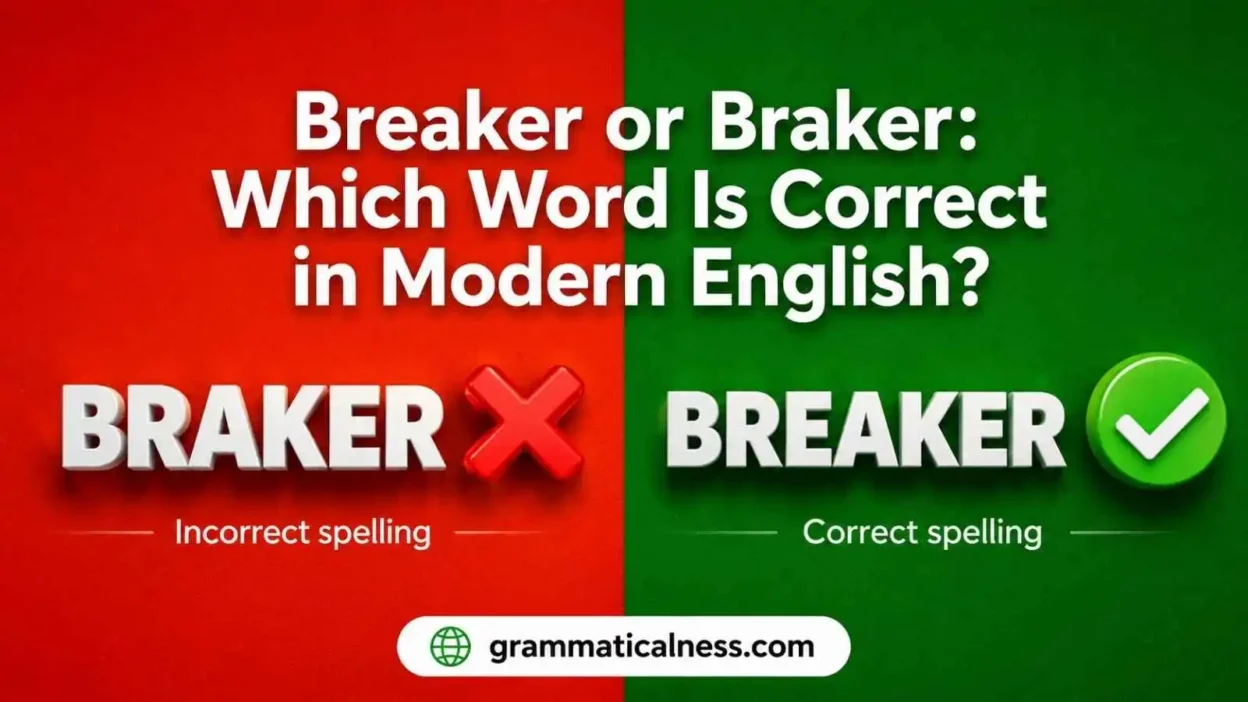
Many people see breaker and braker and assume they are alternate spellings of the same word. They are not.
Although both words exist, they are not used equally. One is a common, standard English word. The other is a rare specialty term that most people will never need in everyday writing.
Understanding the difference makes it easier to choose the right word with confidence.
Quick Answer
Use breaker in almost every normal situation.
Use braker only in a rare technical or historical sense where that specific word is intended.
If you are writing about a circuit breaker, ocean breakers, a deal-breaker, or a record breaker, the correct word is breaker.
Why People Confuse Them
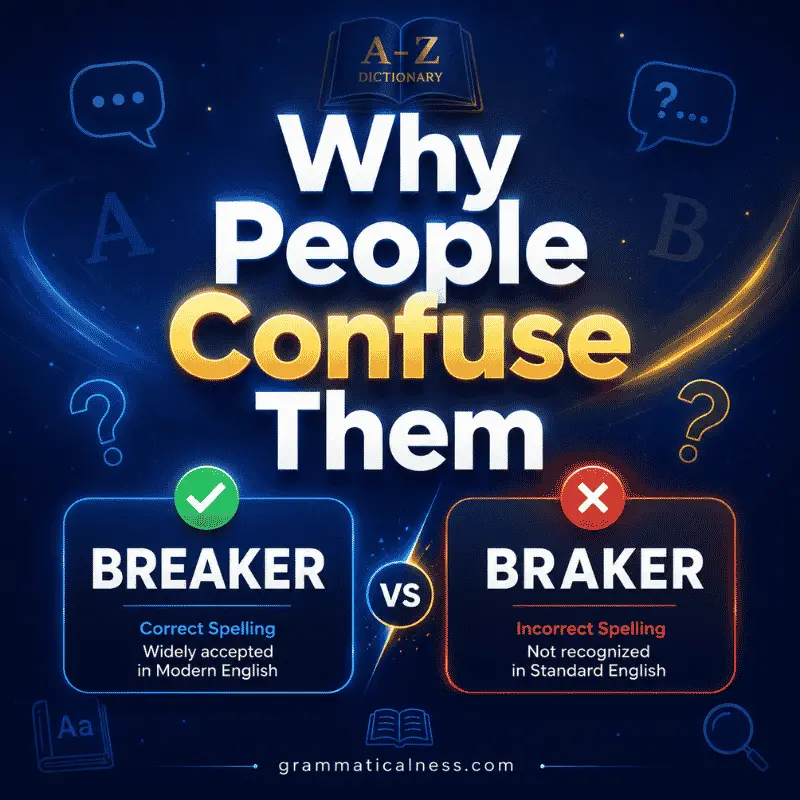
The confusion usually comes from sound.
Both words are commonly pronounced the same way: BRAY-ker.
Many writers also connect the spelling to the word brake, which can make braker seem logical at first glance.
Another reason is that braker appears in some dictionaries. Once people discover that, they sometimes assume it can replace breaker in everyday writing. It cannot.
Key Differences At A Glance
| Context | Best Choice | Why |
| Electrical device | breaker | Standard term: circuit breaker |
| Ocean wave | breaker | Standard dictionary meaning |
| Deal-breaker | breaker | Established expression |
| Record breaker | breaker | Common modern usage |
| General writing | breaker | Readers expect it |
| Rare dough-production job | braker | Specialty dictionary meaning |
Meaning and Usage Difference
The biggest difference is simple.
Breaker is a standard noun with several common meanings. It can refer to a person, object, machine, or wave that breaks something.
Examples include:
- circuit breaker
- deal-breaker
- tie-breaker
- record breaker
- ocean breakers
Braker is a much narrower word. Modern dictionaries list it as a rare specialty noun. One documented meaning refers to a worker who rolls dough in a machine called a brake.
Because both words are usually pronounced alike, spelling becomes especially important.
Quick Comparison
| Feature | breaker | braker |
| Common in modern English | Yes | No |
| Found in everyday writing | Yes | Rarely |
| Used in electrical terms | Yes | No |
| Used in common expressions | Yes | No |
| Specialized technical meaning | Sometimes | Yes |
Tone, Context, and Formality
This comparison is not really about formal versus informal language.
Instead, it is about standard versus specialized usage.
Breaker works in nearly every setting:
- casual conversation
- business writing
- journalism
- technical documents
- school assignments
Braker feels unusual in ordinary writing. Most readers will assume it is a typo unless the context clearly requires the rare technical meaning.
Which One Should You Use?
Choose breaker when referring to:
- electrical equipment
- waves near a shore
- people or things that break records
- rule-breakers
- tie-breakers
- deal-breakers
Choose braker only when discussing its specific specialty meaning.
For most writers, breaker is the correct choice nearly 100% of the time.
When One Choice Sounds Wrong
Some sentences immediately signal the correct answer.
Correct:
- The circuit breaker shut off the power.
- We watched the breakers crash against the beach.
- That contract clause was a deal-breaker.
Wrong:
- The circuit braker shut off the power.
- We watched the brakers crash against the beach.
- That contract clause was a deal-braker.
In normal American English, those uses look incorrect because readers expect breaker.
Common Mistakes (and Quick Fixes)
Mistake: The braker tripped during the storm.
Fix: The breaker tripped during the storm.
Mistake: The price increase was a real braker.
Fix: The price increase was a real deal-breaker.
Mistake: We could hear the brakers from our hotel room.
Fix: We could hear the breakers from our hotel room.
A good memory trick is this:
If the idea involves something that breaks, interrupts, stops, or ends something, breaker is usually the word you need.
Everyday Examples
Here are examples that reflect modern US English.
- The breaker shut off before the wiring overheated.
- The surfers paddled past the breakers.
- That extra fee became a deal-breaker.
- She was a record breaker in high school track.
- The referee used a tie-breaker to decide the winner.
Rare specialty use:
- The old factory employed a braker to work with dough-processing equipment.
Most readers will never encounter that last meaning outside specialized material.
Why Is It Called a Circuit Breaker?
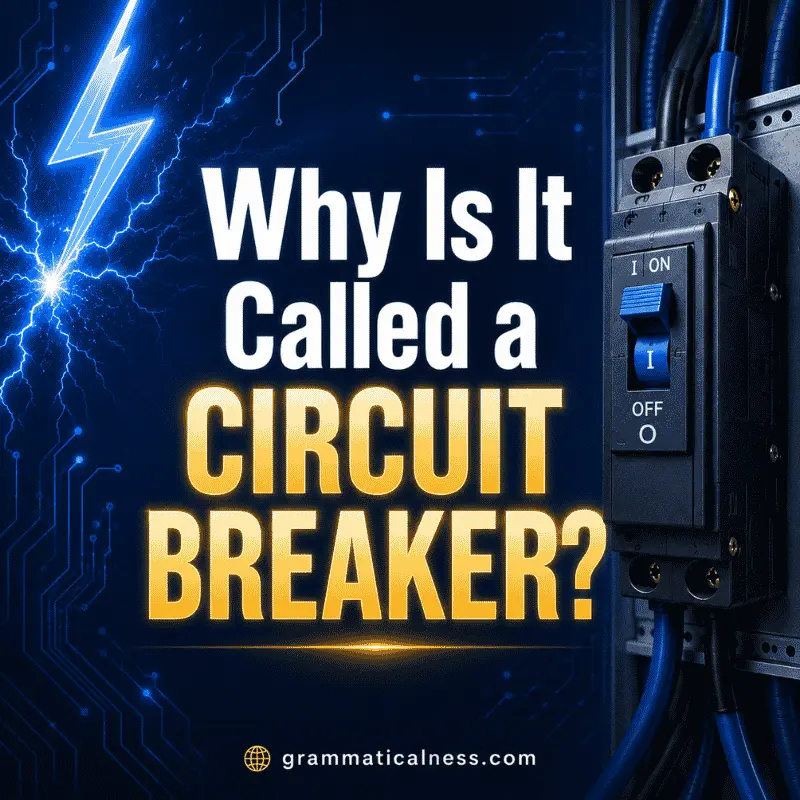
The correct electrical term is circuit breaker, not circuit braker. The spelling comes from the verb break because the device opens, or breaks, a circuit when excessive current creates an unsafe condition.
A circuit breaker can be switched on or off manually, but it also opens the circuit automatically when it detects a predetermined overcurrent. A fuse provides similar protection, although it works by melting a current-sensitive element and normally must be replaced after it operates.
This gives you a simple way to remember the spelling:
A circuit breaker breaks the circuit. It does not brake it.
Dictionary-Style Word Details
Verb
breaker: Not commonly used as a verb in standard US English.
braker: Not commonly used as a verb in standard US English.
Noun
breaker: A person, thing, machine, or wave that breaks something; also part of many common compound nouns.
braker: A rare specialty noun referring to a worker associated with a machine called a brake in certain industrial settings.
Synonyms
breaker:
Closest plain alternatives depend on the meaning:
- interrupter
- stopper
- record holder
- wave
For a deal-breaker:
- obstacle
- sticking point
- deciding factor
braker:
No widely used everyday synonym exists because the word itself is highly specialized.
Example Sentences
breaker:
- The circuit breaker prevented damage to the system.
- The beach was crowded with people watching the breakers.
- Hidden fees became a deal-breaker for the buyer.
braker:
- The historical document referred to a braker in the production process.
- Few modern readers recognize the word braker without explanation.
Word History
Breaker: Derived from the verb break and has been used in English for centuries in several noun meanings.
Braker: Appears in dictionaries as a rare specialty noun connected to the word brake in an older industrial sense. Detailed historical usage is limited and uncommon in modern writing.
Phrases Containing
breaker:
- circuit breaker
- deal-breaker
- tie-breaker
- record breaker
- rule-breaker
- icebreaker
braker:
No widely used modern phrases are commonly associated with the word.
Frequently Asked Questions
Is breaker or braker correct?
In almost all modern American English situations, breaker is the correct choice. It is the standard word used in expressions such as circuit breaker, deal-breaker, tie-breaker, and record breaker.
Is braker a real word?
Yes. Braker is a real dictionary word, but it is rare and used in specialized or historical contexts. Most people never encounter it in everyday writing.
Is “circuit braker” correct?
No. The correct term is circuit breaker. Using braker in this phrase is considered a spelling mistake.
Why do people confuse breaker and braker?
The two words are usually pronounced the same way, which can make them easy to mix up when writing. Many people also associate braker with the word brake, even though breaker is the standard form in common expressions.
Which word should I use in professional writing?
Use breaker unless you are intentionally referring to the rare specialized meaning of braker. In business, academic, technical, and everyday writing, breaker is the expected choice.
Can breaker refer to ocean waves?
Yes. A breaker is a wave that breaks near the shore. This is one of the word’s long-established meanings.
Example: The surfers waited beyond the breakers.
Is “deal-braker” correct?
No. The correct expression is deal-breaker.
Correct: The hidden fees were a deal-breaker.
Incorrect: The hidden fees were a deal-braker.
Are breaker and braker different parts of speech?
Not usually. Both words are primarily nouns. Neither is commonly used as a verb in standard American English.
Are there common phrases with braker?
No. Unlike breaker, which appears in many common expressions, braker is not widely used in modern phrases or idioms.
How can I remember the difference?
A simple rule is:
- If you mean something that breaks, interrupts, ends, or stops something, use breaker.
- Use braker only when referring to its rare specialized meaning.
For most writers, choosing breaker will be correct nearly every time.
Conclusion
In modern American English, breaker is the correct spelling in almost every situation. It is used for electrical devices, ocean waves, and familiar expressions such as circuit breaker, deal-breaker, tie-breaker, and record breaker.
Braker is a real but extremely rare specialized word, so most writers will never need it. Unless you are referring to its specific industrial meaning, choose breaker.
A simple way to remember the difference is:
A breaker breaks something; it does not brake it.