Hi or Hello: Meaning, Differences, and When to Use Each
Both hi and hello are correct ways to greet someone. The main difference is usually tone rather than basic meaning. Hi tends to sound more…
Dreamed or Dreamt: Which Is Correct in American English?
Choosing between dreamed or dreamt can be confusing because both words look like possible past forms of dream. In this case, both really are…
Grateful or Greatful: Correct Spelling, Meaning, and Usage
Choosing between grateful or greatful may seem confusing because the two spellings would sound the same when spoken. However, they are not two…
Either or Neither: Correct Usage, Differences, and Examples
Either or neither can both refer to alternatives, so choosing the right word may seem confusing at first. However, they do not express the…
Discrete or Discreet: Meaning, Differences, and Examples
Discrete and discreet are both correct English words, but they do not mean the same thing. Use discrete when something is separate, distinct,…
Me Either or Me Neither: Which Is Correct in US English?
When someone makes a negative statement, should you reply “me either” or “me neither”? For most speakers who want a safe, widely accepted…
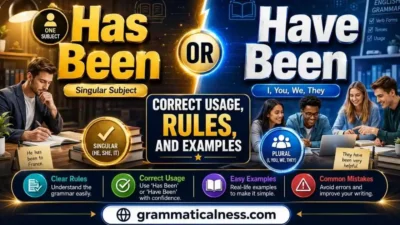
Has Been or Have Been: Correct Usage, Rules, and Examples
Both has been and have been are correct English. The right choice depends mainly on the subject of the sentence. Use has been with…
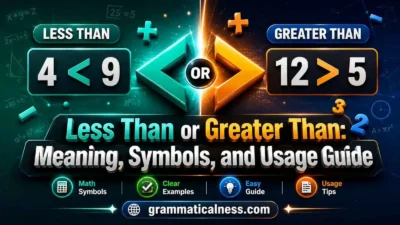
Less Than or Greater Than: Meaning, Symbols, and Usage Guide
Both less than and greater than are correct, but they express opposite comparisons. Use less than when the first value is smaller. Use greater…
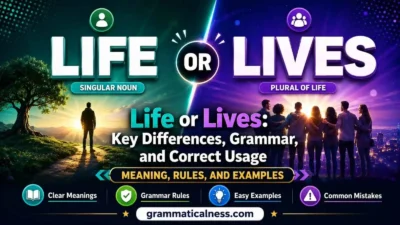
Life or Lives: Key Differences, Grammar, and Correct Usage
Both life and lives are correct, but they do not serve the same purpose in every sentence. The main difference usually involves grammatical…
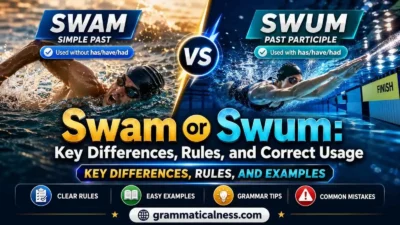
Swam or Swum: Key Differences, Rules, and Correct Usage
Both swam and swum are correct forms of the verb swim, but they do different jobs. Use swam for a completed action in the simple past. Use…