
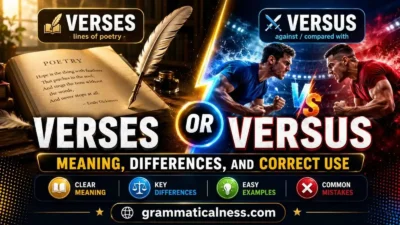
Verses or Versus: Meaning, Differences, and Correct Use
Both verses and versus are correct English words, but they do completely different jobs. Use verses when you mean more than one section of a…
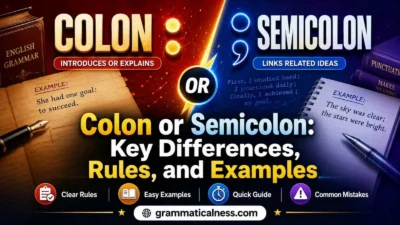
Colon or Semicolon: Key Differences, Rules, and Examples
A colon and a semicolon are punctuation marks with different jobs. A colon points forward to information that explains, identifies, or lists…
Anyway or Anyways: Correct Usage, Meaning, and Examples
Anyway and anyways usually communicate the same basic idea, but they do not carry the same level of acceptance. The difference is mainly one…
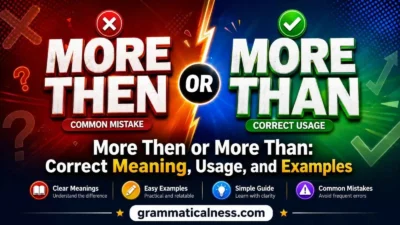
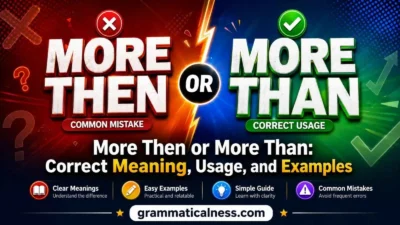
More Then or More Than: Correct Meaning, Usage, and Examples
The correct choice is usually more than because than introduces a comparison or a quantity limit. Use it in sentences such as “The repair cost…
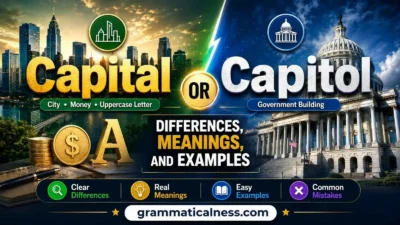
Capital or Capitol: Differences, Meanings, and Examples
Capital and capitol sound exactly alike, but they do not mean the same thing. Use capital when referring to a city that serves as the center…
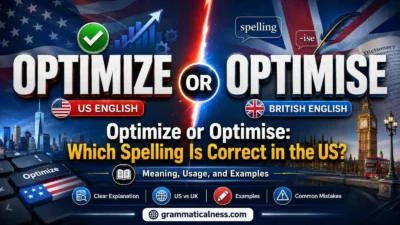
Optimize or Optimise: Which Spelling Is Correct in the US?
Optimize and optimise are two spellings of the same verb. They have the same meaning, follow the same grammar, and are pronounced the same…
Mecca or Makkah: Meaning, Difference, and Correct Usage
Mecca and Makkah usually identify the same holy city in Saudi Arabia. However, the forms are not always used in the same settings. Makkah is…
Mase or Mace: Meaning, Difference, and Correct US Usage
Mase and mace may look like two spellings of the same word, but they are not ordinary spelling variants. In most everyday writing, mace is the…

ceo or coo: Key Differences in Roles and Responsibilities
CEO and COO are both senior business titles, but they do not describe the same position. A CEO normally leads the entire organization and…
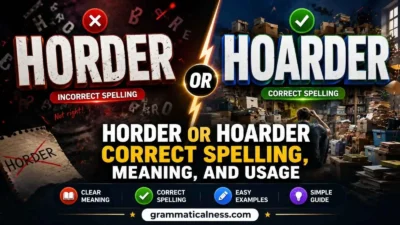
Horder or Hoarder: Correct Spelling, Meaning, and Usage
The correct modern word is hoarder when you mean a person who collects, stores, or keeps large amounts of something. The spelling horder is…