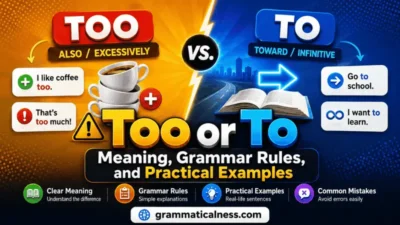
Word Choice6 Min Read Daniel BrooksonJuly 27, 2026 Too or To: Meaning, Grammar Rules, and Practical Examples Choosing between too and to can be frustrating because the words look similar and often sound alike. However, they have different jobs in a…

Word Choice6 Min Read Daniel BrooksonJuly 27, 2026 Lay or Lie: Correct Usage, Verb Forms, Rules, and Examples Both lay and lie can relate to a resting or horizontal position, but they follow different sentence patterns. The correct choice depends on…
Word Choice6 Min Read Daniel BrooksonJuly 26, 2026 Elude or Allude: Meaning, Differences, and Clear Examples Both elude and allude are correct English words, but they express different ideas. Use elude when someone or something escapes, avoids…
Word Choice8 Min Read Daniel BrooksonJuly 26, 2026 Complement vs Compliment: Meaning, Difference, and Examples Complement and compliment are both correct English words, but they express different ideas. Use complement when one person or thing completes,…
Word Choice8 Min Read Daniel BrooksonJuly 26, 2026 Emigrate vs Immigrate: Meaning, Difference, and Examples Emigrate and immigrate can describe the same international move, but they present it from different directions. Use emigrate when the sentence…
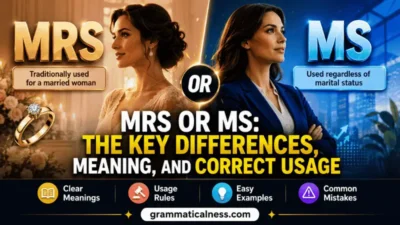
Word Choice7 Min Read Daniel BrooksonJuly 25, 2026 Mrs or Ms: The Key Differences, Meaning, and Correct Usage Mrs. and Ms. are both correct titles for women, but they do not communicate the same information. Use Mrs. for a married woman who uses that…
Word Choice7 Min Read Daniel BrooksonJuly 25, 2026 Alot or a Lot: Correct Spelling, Meaning, Usage, and Examples Choosing between alot or a lot becomes simple once you know that only one form is accepted in standard American English. Write a lot as two…
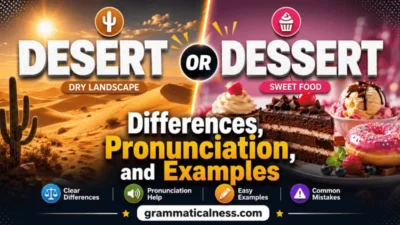
Word Choice7 Min Read Daniel BrooksonJuly 25, 2026 Desert or Dessert: Differences, Pronunciation, and Examples Both desert and dessert are correct English words, but they do not have the same meaning. Use desert for a dry region or for the act of…
Word Choice6 Min Read Daniel BrooksonJuly 24, 2026 I Use To or I Used To: Correct Grammar and Usage Explained When you are talking about a past habit or a situation that was true before, “I used to” is normally correct. For example: I used to walk to…
Word Choice9 Min Read Daniel BrooksonJuly 24, 2026 Lie Down or Lay Down: Meaning, Difference, and Correct Use Lie down and lay down are both correct English phrases, but they do not always do the same grammatical job. Use lie down when a person or…