


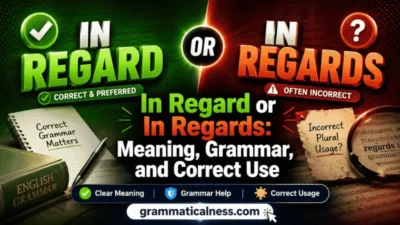
In Regard or In Regards: Meaning, Grammar, and Correct Use
You are writing an email and pause at one sentence: “I am contacting you in regard to your application.” Should “regard” have an s? The…

Do or Do Not: Meaning, Grammar, and Correct Usage Guide
A single word can completely reverse an instruction: “Do press the blue button.” “Do not press the blue button.” Both forms are correct, but…

Where or Were: The Clear Difference, Rules, and Examples
Imagine typing a message to a coworker: “Were is the meeting?” The reader may understand your intention, but the sentence is incorrect. You…

Preform or Perform: Meanings, Differences, and Examples
Both preform and perform are real English words, but they do not mean the same thing. In most everyday sentences about doing a task,…

Ensure or Insure: Correct Usage, Differences, and Examples
Ensure and insure are both correct English words, but they usually serve different purposes. Use ensure when someone takes action to make a…

Relieving or Reliving: Meaning, Difference, and Examples
Both relieving and reliving are correct English words, but they describe very different actions. Use relieving when someone or something…

Cue or Queue: Meaning, Grammar, Differences, and Examples
Cue and queue are both correct English words, but they are not interchangeable. Use cue for a signal, prompt, hint, or billiards stick. Use…
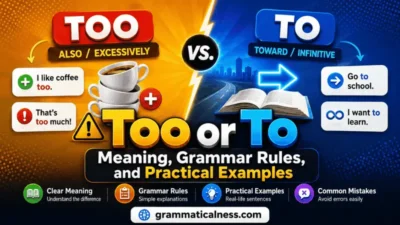
Too or To: Meaning, Grammar Rules, and Practical Examples
Choosing between too and to can be frustrating because the words look similar and often sound alike. However, they have different jobs in a…

Lay or Lie: Correct Usage, Verb Forms, Rules, and Examples
Both lay and lie can relate to a resting or horizontal position, but they follow different sentence patterns. The correct choice depends on…

Elude or Allude: Meaning, Differences, and Clear Examples
Both elude and allude are correct English words, but they express different ideas. Use elude when someone or something escapes, avoids…