
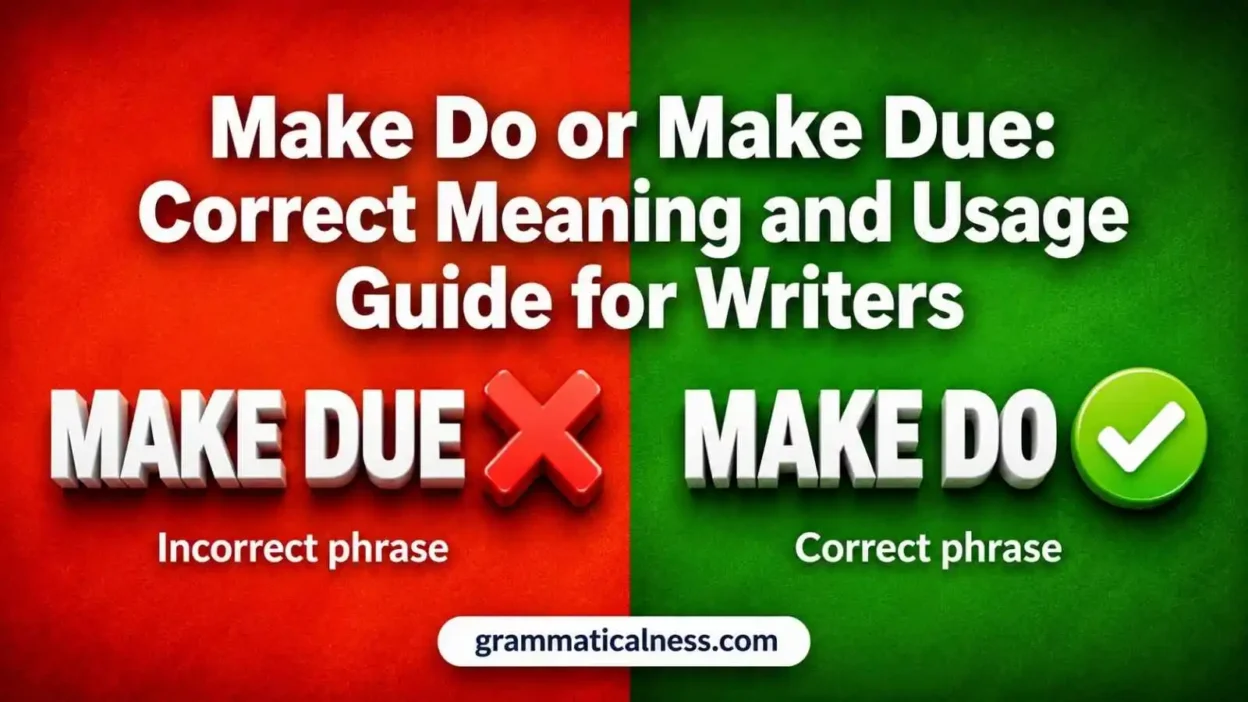
The correct phrase is make do, not make due.
Use make do when you mean to manage with what you have, especially when the situation is not ideal. Make due is a common mistake in this meaning.
Write this:
We forgot the charger, so we’ll make do until we get home.
Do not write this:
We forgot the charger, so we’ll make due until we get home.
Quick Answer
Make do means to cope, manage, or get by with available resources. Make due is not the standard phrase for that meaning.
| Context | Best Choice | Why |
| Managing with limited supplies | make do | It means to use what is available. |
| Working without the perfect option | make do | It fits imperfect or temporary situations. |
| Talking about a deadline | due | Use “due,” but not “make due.” |
| Professional writing | make do | It is the standard form. |
| Casual texting or speech | make do | The phrase is still spelled the same way. |
The simple rule: if you mean “manage with what you have,” write make do.
Why People Confuse Them
People confuse make do and make due because do and due often sound the same in everyday US speech: “doo.”
That sound match makes make due look possible, especially because due is a real word. You can say:
The rent is due Friday.
The train is due at 6:15.
But those uses of due are not the same as make do. In make do, the word do helps form an idiom about managing or getting by.
Just like the confusion between “make do” and “make due,” many writers also struggle with per se vs per say usage and meaning per se or per say in everyday writing.
Key Differences At A Glance
- make do: correct phrase for managing with what is available
- make due: incorrect for that meaning
- do: works in the idiom because it suggests something serving the purpose well enough
- due: means owed, expected, proper, or scheduled in other sentences
- made do: correct past tense
- made due: incorrect when you mean “managed”
Meaning and Usage Difference
Make do is a verb phrase. It means you accept a less-than-perfect option and keep going.
Examples:
We ran out of chairs, so a few people had to make do with stools.
The office printer broke, but we can make do without it for one day.
The team had to make do with a smaller budget.
Make due does not work as the phrase for managing. The word due has its own jobs, but this is not one of them.
Use due when something is owed, expected, proper, or scheduled:
The payment is due tomorrow.
The baby is due in July.
Give her the credit she is due.
So the real difference is not a subtle tone difference. It is a correctness difference. Make do is the phrase you want. Make due is the mistake people make because the words sound alike.
Tone, Context, and Formality
Make do works in everyday US English. It sounds natural in conversation, emails, workplace updates, school writing, and news-style writing.
It can feel slightly practical or informal because it often describes real-life problem solving:
We’ll make do with the supplies we have.
For very formal writing, you may choose a plainer alternative such as manage with, cope with, or use the available resources.
Still, make do is not slang. It is a normal phrase.
Make due sounds wrong in edited writing. In a work email, school paper, article, or business note, it can look like a spelling or word-choice error.
Which One Should You Use?
Use make do almost every time this question comes up.
Choose make do when the sentence means:
You do not have the best option.
You will use what is available.
You can continue even with limits.
You are improvising.
Examples:
We don’t have fresh basil, so we’ll make do with dried herbs.
My laptop is slow, but I’ll make do until I can replace it.
They had to make do with fewer staff members during the rush.
Use due by itself only when you mean owed, expected, or scheduled:
The report is due by noon.
The refund is due this week.
Respect is due to every person in the room.
When One Choice Sounds Wrong
Make due sounds wrong when it replaces make do.
Wrong: We can make due with one car this week.
Correct: We can make do with one car this week.
Wrong: She made due with an old phone.
Correct: She made do with an old phone.
Wrong: The class had to make due without a projector.
Correct: The class had to make do without a projector.
The word due is fine in the right sentence. It just does not belong in this phrase.
Correct: The invoice is due today.
Correct: The train is due at 8:40.
Correct: He finally received the praise he was due.
Common Mistakes (and Quick Fixes)
Mistake: Using make due because it sounds like make do.
Fix: Remember that make do means “do what you can with what you have.”
Mistake: Writing made due as the past tense.
Fix: Write made do.
Mistake: Mixing the phrase with deadlines.
Fix: Use due only for the deadline part.
Wrong: The paper will make due Monday.
Better: The paper is due Monday.
Mistake: Thinking make do is too casual for work.
Fix: It is acceptable, but you can use manage with when you want a more formal tone.
Everyday Examples
We’re out of milk, so I’ll make do with black coffee.
The hotel didn’t have a desk, but I made do with the small table.
Our team had to make do with a tight budget this quarter.
I forgot my headphones, so I’ll make do with the laptop speakers.
They made extra space in the garage and made do for the weekend.
We didn’t have the right pan, so we made do with a baking sheet.
Until the replacement part arrives, the repair crew will make do with what’s on hand.
Dictionary-Style Word Details
Verb
make do: A verb phrase meaning to manage, cope, or get by with what is available. It changes tense through make: make do, makes do, making do, made do.
make due: Not a standard verb phrase for this meaning in US English. Use make do instead.
Noun
make do: Not commonly used as a noun without a hyphen in standard US English. The related hyphenated form make-do can be a noun meaning a makeshift substitute, but that is a separate spelling.
make due: Not commonly used as a noun for this meaning.
Synonyms
make do: Closest plain alternatives include manage, get by, cope, improvise, make the best of it, and use what is available.
make due: No true synonyms for the mistaken phrase. If you mean “manage,” use the alternatives for make do.
Clear opposites are not exact, but the opposite idea is having exactly what you need or being fully prepared.
Example Sentences
make do: We had no conference room, so we had to make do in the break room.
make do: She made do with last year’s laptop until the new one arrived.
make do: If the store is out of the brand we like, we can make do with another one.
make due: Avoid this when you mean “manage.” Write make do.
Word History
make do: The phrase comes from the idea of making something “do,” meaning making it serve the purpose well enough. That is why do belongs in the expression.
make due: The mistaken form likely survives because do and due sound alike for many US speakers. A safe modern rule is simple: use make do for managing with what you have.
Phrases Containing
make do:
- make do with: We’ll make do with two chairs.
- make do without: We’ll make do without dessert tonight.
- made do: They made do with a smaller apartment.
- making do: We’re making do until the new supplies arrive.
make due:
No standard phrases use make due to mean “manage with what is available.” Use make do instead.
FAQs
Is it make do or make due?
The correct phrase is make do. Use it when you mean to manage with what you have.
Is make due ever correct?
Not when you mean “manage” or “get by.” Make due is a common mistake. The word due is correct in sentences about deadlines, payments, or expected events, but not in this phrase.
What does make do mean?
Make do means to use what is available, even if it is not perfect.
Example:
We didn’t have enough chairs, so we had to make do with stools.
Why do people write make due?
People often write make due because do and due sound alike in speech. Since due is a real word, the mistake can look reasonable, but make do is the standard phrase.
Is it made do or made due?
The correct past tense is made do.
Correct:
She made do with an old laptop.
Incorrect:
She made due with an old laptop.
Is make do informal?
Make do is natural in everyday English and acceptable in many kinds of writing. In very formal writing, you can use manage with or use what is available instead.
Can I say make do with?
Yes. Make do with is one of the most common forms.
Example:
We’ll make do with the supplies we already have.
Can I say make do without?
Yes. Make do without means to manage even though something is missing.
Example:
The office Wi-Fi is down, so we’ll make do without it for now.
What is another way to say make do?
Good alternatives include manage, get by, cope, improvise, and make the best of it.
What is the easiest way to remember make do?
Think of it this way: when you do not have the ideal option, you do what you can. That means you make do.
Conclusion
Use make do, not make due, when you mean to manage with what you have.
Make do is the standard phrase. It fits sentences about limited money, missing supplies, imperfect tools, or temporary fixes.
Make due is the common error. The word due is correct in sentences about deadlines, payments, expectations, and what someone deserves, but it does not belong in the phrase make do.
The easiest way to remember it: when you have less than you want, you do what you can. You make do.