

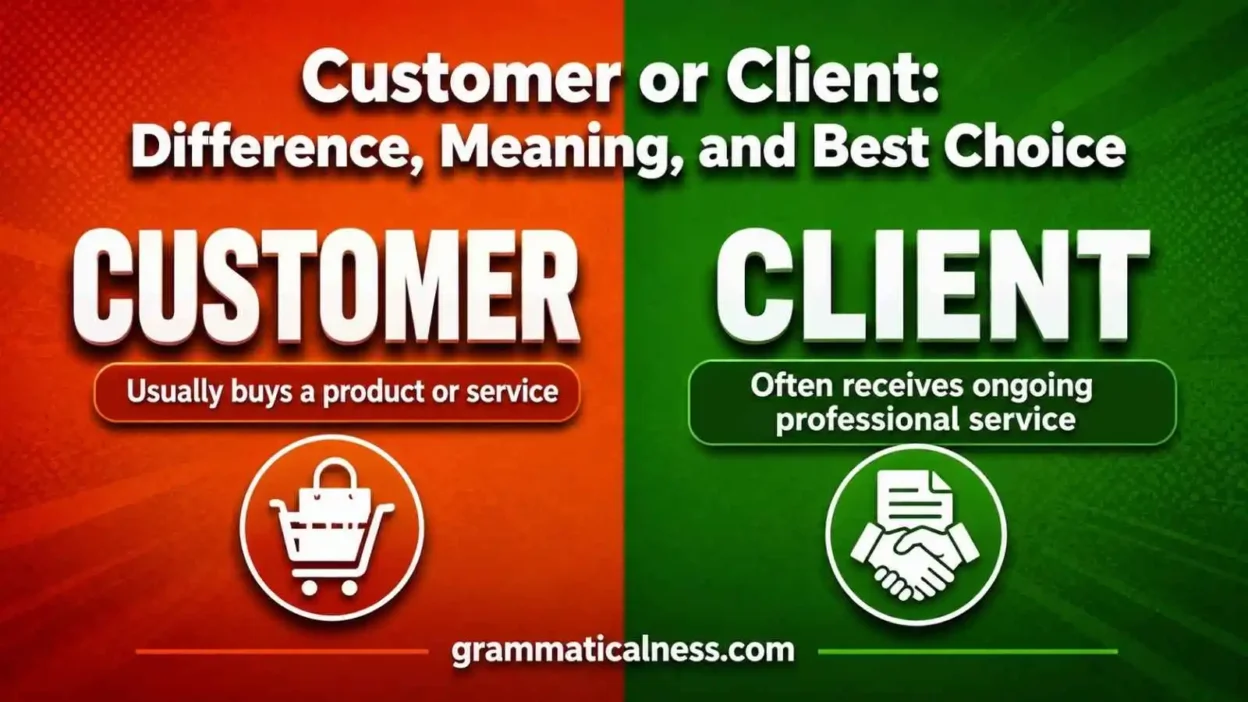
Customer and client are both correct words, but they do not always fit the same situation. The difference depends on what the person buys and what kind of relationship exists.
In simple terms, use customer for a person who buys goods or services. Use client for a person or organization that receives professional advice, representation, tailored service, or ongoing support. The words can overlap, but they are not always interchangeable.
Quick Answer
Use customer for a buyer in a store, restaurant, website, company, or service business. Use client when the person works with a professional or receives advice, planning, representation, or customized service. A lawyer has clients. A coffee shop has customers. A business may have both.
Why People Confuse Them
People confuse customer and client because both words can describe someone who pays for something.
A person who buys a meal is a customer. A person who hires an attorney is a client. In both cases, money changes hands. That shared idea makes the words feel close.
However, the relationship is different. Customer usually points to the sale. Client often points to service, guidance, trust, or a continuing relationship.
A marketing agency, law firm, design studio, accountant, therapist, consultant, or financial adviser usually says client. A grocery store, retail shop, coffee shop, airline, hotel, or online store usually says customer.
Key Differences At A Glance
| Context | Best Choice | Why |
| Someone buys groceries | customer | The focus is a retail purchase. |
| Someone hires a lawyer | client | The person receives professional advice and representation. |
| Someone orders coffee | customer | The exchange is quick and purchase-based. |
| Someone works with a consultant | client | The service is customized and advisory. |
| Someone calls a help line after buying a product | customer | The person is being helped as a buyer. |
| A company signs a long service contract | client | The relationship is ongoing and service-based. |
| A restaurant guest pays for lunch | customer | The normal word is tied to buying food or service. |
| A designer creates a brand package for a business | client | The work is tailored to that business. |
Meaning and Usage Difference
Customer means a person or organization that buys goods or services. It is the broader word. A customer may buy once, buy often, shop online, visit a store, subscribe to a service, or contact support after a purchase.
Client means a person or organization that uses the services or advice of a professional person or organization. It often suggests a closer relationship than customer. The service may involve expertise, planning, privacy, personal attention, or long-term support.
Here is the cleanest way to think about it:
| Feature | Customer | Client |
| Main idea | Buyer | Service or advice receiver |
| Common setting | Stores, restaurants, websites, product companies | Law, consulting, design, finance, therapy, agencies |
| Relationship | Often transaction-focused | Often ongoing or personalized |
| Service level | May be standard | Often tailored |
| Best example | A customer buys a laptop. | A client hires an accountant. |
Customer is not wrong for services. For example, a phone company, bank, airline, or repair shop may talk about customers. Client is not wrong for every business, either, but it works best when the business provides skilled advice, representation, or custom work.
Tone, Context, and Formality
Client can sound more professional in fields where advice or representation matters. That does not mean client is automatically more formal or more impressive than customer.
In fact, client can sound unnatural when the relationship is ordinary retail.
Natural: The cashier helped the customer find the receipt.
Awkward: The cashier helped the client find the receipt.
Customer sounds normal in everyday business writing. It is clear, direct, and widely understood.
Natural: Our customer support team replies within one business day.
Natural: Customers can return unopened items within 30 days.
Client sounds natural when the person has hired someone for expertise.
Natural: The attorney met with her client before court.
Natural: The agency sent the client three design options.
Do not choose client just because it sounds polished. Choose it because the relationship fits.
Which One Should You Use?
Use customer when the person buys something from a business, store, restaurant, company, or website.
Examples:
A customer left a review after the delivery.
The store gives loyal customers early access to sales.
Our customers can track their orders online.
Use client when the person receives professional service, personal guidance, or customized work.
Examples:
The accountant prepared tax documents for a client.
The consultant helped the client improve hiring.
Our agency meets with each client before starting a project.
Some businesses can use both words, depending on the situation.
A gym may call walk-in buyers customers, but a personal trainer may call one-on-one trainees clients. A bank may say customers in general, but a private wealth adviser may say clients.
When One Choice Sounds Wrong
Customer sounds too transactional in fields that rely on trust, privacy, or representation.
Less natural: The lawyer called her customer before the hearing.
Better: The lawyer called her client before the hearing.
Client sounds too personal or specialized for a simple purchase.
Less natural: The grocery store had many clients on Saturday.
Better: The grocery store had many customers on Saturday.
Customer also fits better in service departments.
Natural: Customer service will help you reset your password.
Less natural: Client service will help you reset your password.
However, client service can work in professional settings, such as law firms, agencies, or wealth management companies.
Common Mistakes (and Quick Fixes)
Mistake: Using client for every buyer to sound more professional.
Quick fix: Use customer unless the person receives advice, representation, or tailored service.
Mistake: Saying customers cannot buy services.
Quick fix: Customers can buy services. The word client is more specific.
Mistake: Calling a retail shopper a client.
Quick fix: Say customer for ordinary shopping, dining, ordering, and support.
Mistake: Calling a legal, consulting, or therapy relationship a customer relationship.
Quick fix: Say client when professional trust or advice is central.
Mistake: Switching between customer and client in the same paragraph with no reason.
Quick fix: Pick the word that matches the relationship and stay consistent.
Everyday Examples
The customer paid for the shoes at the front counter.
A client asked the designer to revise the logo.
The restaurant gives regular customers a free dessert on birthdays.
The attorney keeps each client’s documents private.
Customers can cancel their subscription online.
The financial planner meets with clients every quarter.
The customer complained that the package arrived late.
The consultant prepared a report for the client.
A customer bought a gift card for her sister.
The agency’s biggest client requested a new campaign.
Dictionary-Style Word Details
Verb
Customer: Not commonly used as a verb in standard US English.
Client: Not commonly used as a verb in standard US English. You may see business slang such as client-facing or client-side, but client itself is normally a noun.
Noun
Customer: A customer is a person or organization that buys goods or services. The word is common in retail, food service, online shopping, subscriptions, travel, banking, and support.
Client: A client is a person or organization that receives professional services, advice, representation, or customized support. The word is common in law, consulting, design, therapy, finance, accounting, and agency work. Client can also mean a device or program that connects to a server, but that meaning is separate from the business comparison.
Synonyms
Customer: Closest plain alternatives include buyer, shopper, purchaser, patron, guest, and consumer. These are not always exact. Shopper fits retail. Guest fits hotels or restaurants. Consumer often means the end user of goods or services.
Client: Closest plain alternatives include account, patron, customer, case, or service recipient, depending on context. In professional settings, customer may be too broad.
Antonyms are not always clean because both words name a buyer or service receiver. In business contexts, seller, provider, vendor, merchant, or professional may work as opposite-side terms, but they are not exact antonyms in every sentence.
Example Sentences
Customer: The customer asked for a refund after the item arrived damaged.
Client: The client approved the final contract on Friday.
Customer: Our customers prefer simple checkout options.
Client: The lawyer explained the next step to her client.
Customer: A new customer signed up for the monthly plan.
Client: The architect showed the client three floor plans.
Word History
Customer: The word is connected to custom, meaning habitual practice or regular dealing. In modern use, it mainly means someone who buys goods or services.
Client: The word has older links to dependence, protection, and service relationships. In modern use, it commonly means someone who receives professional advice or services.
Both histories support the modern difference, but today’s best choice should come from current context, not from word origin alone.
Phrases Containing
Customer: customer service, customer support, customer base, customer experience, customer review, customer loyalty, customer satisfaction, regular customer, paying customer.
Client: client meeting, client relationship, client account, client services, client work, client file, client feedback, client portal, corporate client, private client.
FAQs
Is it customer or client?
Both words are correct, but they fit different situations. Use customer for someone who buys goods or services from a business. Use client for someone who receives professional advice, representation, custom work, or ongoing support.
What is the main difference between a customer and a client?
A customer is usually connected to a purchase. A client is usually connected to a service relationship. For example, a person buying coffee is a customer. A person hiring a lawyer, accountant, designer, or consultant is a client.
Can a client also be a customer?
Yes. A client can be a type of customer because the person or business may still pay for a service. However, client is more specific. It often suggests a closer, more professional, or more personalized relationship.
Should a business say customers or clients?
It depends on the business. Retail stores, restaurants, online shops, and product companies usually say customers. Law firms, agencies, consultants, therapists, accountants, and financial advisers usually say clients.
Is client more professional than customer?
Not always. Client can sound more professional in the right field, but it can sound awkward in ordinary retail. A grocery store has customers, not clients. A lawyer has clients, not customers.
Is customer service or client service correct?
Customer service is the more common phrase for general support. Client service can work in professional-service fields, such as consulting, law, finance, or agency work.
Which word should I use on my website?
Use customers if your website sells products, bookings, subscriptions, or general services. Use clients if your business offers expert advice, personal service, custom work, or long-term professional support.
Conclusion
Customer or client depends on the relationship. Use customer for a person who buys goods or services from a business. It is the broader and safer word for retail, restaurants, online stores, product companies, and support.
Use client when the person receives professional advice, representation, custom work, or ongoing service. A customer buys. A client usually works with a professional. When the relationship is simple, say customer. When it is advisory, personal, or specialized, say client.
Both words are correct, but they fit different situations. Use customer for someone who buys goods or services from a business. Use client for someone who receives professional advice, representation, custom work, or ongoing support.
A customer is usually connected to a purchase. A client is usually connected to a service relationship. For example, a person buying coffee is a customer. A person hiring a lawyer, accountant, designer, or consultant is a client.
Yes. A client can be a type of customer because the person or business may still pay for a service. However, client is more specific. It often suggests a closer, more professional, or more personalized relationship.
It depends on the business. Retail stores, restaurants, online shops, and product companies usually say customers. Law firms, agencies, consultants, therapists, accountants, and financial advisers usually say clients.
Not always. Client can sound more professional in the right field, but it can sound awkward in ordinary retail. A grocery store has customers, not clients. A lawyer has clients, not customers.
Customer service is the more common phrase for general support. Client service can work in professional-service fields, such as consulting, law, finance, or agency work.
Use customers if your website sells products, bookings, subscriptions, or general services. Use clients if your business offers expert advice, personal service, custom work, or long-term professional support.